
Sherry, oloroso, PX, Xérès… these are words that are increasingly found on rum bottle labels. Former Spanish fortified and/or oxidative wine barrels are increasingly being used to finish special and/or limited editions, and are even sometimes used in the aging of regular vintages. What explains this craze among rum brands?
Historically, the practice of using ex-sherry casks to age spirits originated in Scotland and its whisky industry. In the 18th century, Scotland was a major center of maritime trade, particularly with Spain.
Scottish ports (such as Leith, near Edinburgh) regularly received shipments of Jerez wine (sherry) transported in oak casks. These casks were then emptied and, rather than throwing them away or sending them back empty, Scottish merchants used them to export their whiskies or sold them to distilleries.
By aging whisky in these casks, Scottish distilleries improved their whiskies. Since then, Scottish single malts and blends have continued to use ex-sherry casks for aging, and most whisky distilleries around the world now have one or more vintages tinged with the aromas of Spanish fortified and oxidative wines. Some of them, such as Macallan, have even made this their trademark.
Rum: Hispanic producers focus on aging
When it comes to rum, alongside the undisputed bourbon casks, historically we tended to find cognac casks and new oak casks, but hardly any sherry casks. The exception to this was a few brands located in the former Spanish sphere of influence.
The use of ex-sherry casks is an integral part of the aging process at Brugal (Dominican Republic, owned by the Edrington group, like Macallan) and Zacapa (Guatemala, owned by Diageo). “We use four types of casks to age our rums: ex-bourbon casks, ex-cognac casks, new casks, and ex-Pedro Ximénez casks,” explains Lorena Vásquez, the face of Zacapa. “The latter add notes of dried fruit and caramel to the blend.”
This is also the case at Millonario, which uses ex-sherry casks for all of its aging processes, except for the Kyutchi cuvée. “They give the rum aromas of dried fruit (raisins, prunes, figs), nuts, chocolate, and warm spices (cinnamon, nutmeg), with oxidative nuances,” says Marie El Hanafi, Millonario’s brand ambassador. This is thanks to three mechanisms: residual impregnation (where the sherry compounds still present in the wood migrate into the rum); whiskey lactones from oak molecules present in concentrations 10 to 50 times higher than in bourbon barrels, which bring notes of coconut. And finally, the sweet residues from the sherry react with the alcohol to create new fruity aromas. Oloroso barrels give more spicy profiles, while Pedro Ximénez brings more sweetness and candied fruit.
Still on the organoleptic side, ex-sherry barrels are also known to bring aromas of tobacco, leather, or rancio (for long aging). They also affect texture, imparting smoothness and mellow tannins. But they are also highly sought after for their ability to add sweetness and roundness without the need to add sugar, and without exceeding the European Union’s limit of 20 g of sugar per liter.

British and French areas tend to focus on the finish
No doubt inspired by whisky, independent bottlers and distilleries in the British Isles began experimenting with finishes in ex-sherry casks: Velier, then Foursquare, Mount Gay and Stade’s West Indies in Barbados, Hampden with its Pagos cuvée in Jamaica…
Their adoption by rum producers has accelerated in recent years, particularly as a way of standing out in an increasingly competitive market. Distilleries in Spanish-speaking countries that had not yet opted for these finishes followed suit: Don Papa, Diplomático, Santa Teresa, Abuelo, and others have all released cuvées finished in ex-sherry casks.
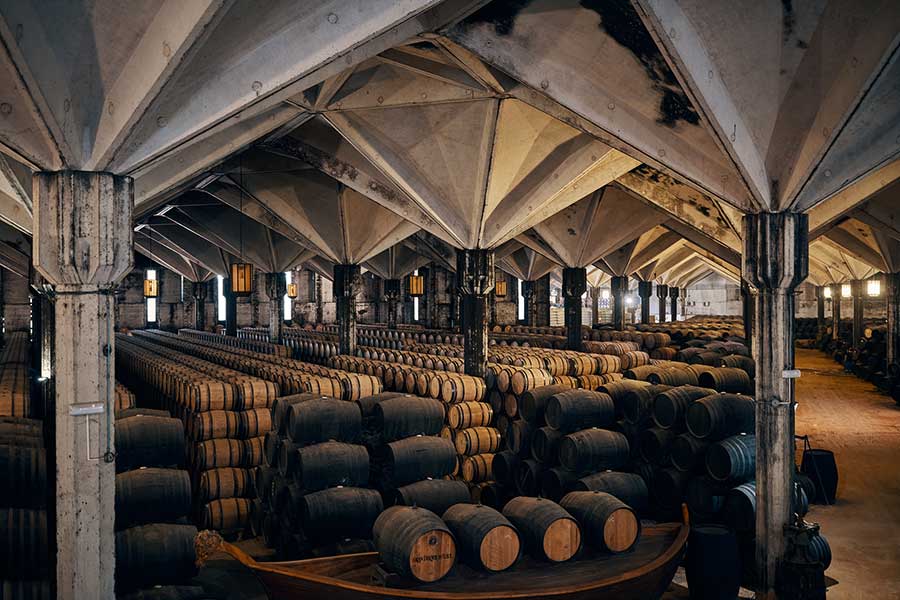
Spain began producing its own rums, with rums from Guyana and Barbados first spending time in the tropics before finding a home in the cathedral of barrels at the Williams & Humbert bodega in Jerez for continental aging in local barrels.
French distilleries remained spectators of this movement for a long time, until HSE in Martinique took the lead with its Finition du Monde range, of course. Since then, a few distilleries have tentatively followed suit, such as Clément with its Cask Collection (also in Martinique), Karukera (7-year-old single cask Brandy de Sherry) and Papa Rouyo Viraj Itinéraires in Guadeloupe, Taha’a T Rhum Sherry Cask Finish in Polynesia, and others. However, the use of ex-sherry casks remains sporadic in France, mainly due to the difficulty of sourcing quality casks.
Interviews
Grégoire Leyx, Director of Alter Oak